Accurate measurement is fundamental to successful cooking and baking, directly impacting the texture, flavor, and consistency of any dish. A common point of confusion for home cooks, particularly when navigating recipes from different regions or adapting ingredient lists, involves the conversion between tablespoons and ounces. Understanding this precise relationship eliminates guesswork, reduces ingredient waste, and ensures repeatable culinary results. This article clarifies the standard conversion, differentiates between volume and weight measurements, and provides practical strategies for achieving exact quantities in your kitchen.
The Fundamental Relationship: Tablespoons to Fluid Ounces
The core of this conversion lies in understanding the established volumetric equivalents within the US customary system. A tablespoon is a unit of volume, as is a fluid ounce. Their relationship is fixed and consistent for liquid ingredients.
Standard US Fluid Ounce Conversion
In the United States customary measurement system, a standard fluid ounce is equivalent to exactly two tablespoons. This means that if a recipe calls for 1 fluid ounce of liquid, you would measure out 2 tablespoons. Conversely, if you have 2 tablespoons of an ingredient, you have precisely 1 fluid ounce. This equivalency holds for all liquid ingredients, from water and milk to oils and extracts, ensuring consistent volume regardless of the liquid's density.
Distinguishing Fluid Ounces from Weight Ounces
A critical distinction to grasp is the difference between a fluid ounce (fl oz), which measures volume, and an ounce (oz) by weight. While both share the "ounce" nomenclature, they represent fundamentally different properties. A fluid ounce measures the space a liquid occupies, whereas an ounce by weight measures its mass. For example, 1 fluid ounce of water weighs approximately 1 ounce, but 1 fluid ounce of olive oil weighs less than 1 ounce due to its lower density. Similarly, 1 fluid ounce of honey would weigh more than 1 ounce. When a recipe specifies "ounces" without the "fluid" prefix, it typically refers to weight, especially for dry ingredients like flour, sugar, or spices. Always verify the context of "ounce" in a recipe to determine if volume or weight is intended, as using the wrong interpretation can significantly alter ingredient ratios and final product quality.
Practical Conversion Scenarios for Home Cooks
Applying the tablespoon-to-ounce conversion effectively depends on the ingredient type and the recipe's demands. Precision is paramount, particularly in baking, where ingredient ratios are more sensitive.
Converting Liquid Ingredients Accurately
For liquids, the 2 tablespoons = 1 fluid ounce rule is universally applicable within the US system. This simplifies tasks such as scaling recipes up or down, or when a recipe provides a quantity in fluid ounces but your measuring tools are primarily marked in tablespoons, or vice-versa. For instance, if a recipe requires 3 fluid ounces of broth, you would measure 6 tablespoons. This direct conversion minimizes the need for complex mental arithmetic during cooking, allowing for quicker and more confident execution of recipes.
Handling Dry Ingredients: Volume vs. Weight Considerations
When dealing with dry ingredients, the conversion from tablespoons to ounces becomes more nuanced because dry ingredients are often measured by weight rather than volume for accuracy. While you *can* measure dry ingredients like flour or sugar by the tablespoon (volume), converting that volumetric measurement directly to a weight ounce is inaccurate without knowing the specific ingredient's density. For example, 2 tablespoons of all-purpose flour do not weigh 1 ounce. Therefore, if a recipe specifies "1 ounce of flour," it implies weight, and a kitchen scale is the appropriate tool, not a volumetric conversion from tablespoons. Rely on volumetric conversions (tablespoons to fluid ounces) exclusively for liquids or when a recipe explicitly provides dry ingredients in fluid ounce equivalents (which is rare and often a sign of an imprecise recipe).
Pro Tip: For critical baking recipes, especially those from professional sources or international cookbooks, prioritize weight measurements over volume whenever possible. A digital kitchen scale provides far greater accuracy for dry ingredients like flour, sugar, and cocoa powder, ensuring consistent results that volumetric measurements cannot guarantee due to variations in packing density and particle size.
Tools for Precise Measurement
The right tools are essential for executing accurate kitchen conversions and ensuring recipe success. Relying on approximations or imprecise instruments introduces variability that can compromise a dish.
Utilizing Measuring Spoons and Cups
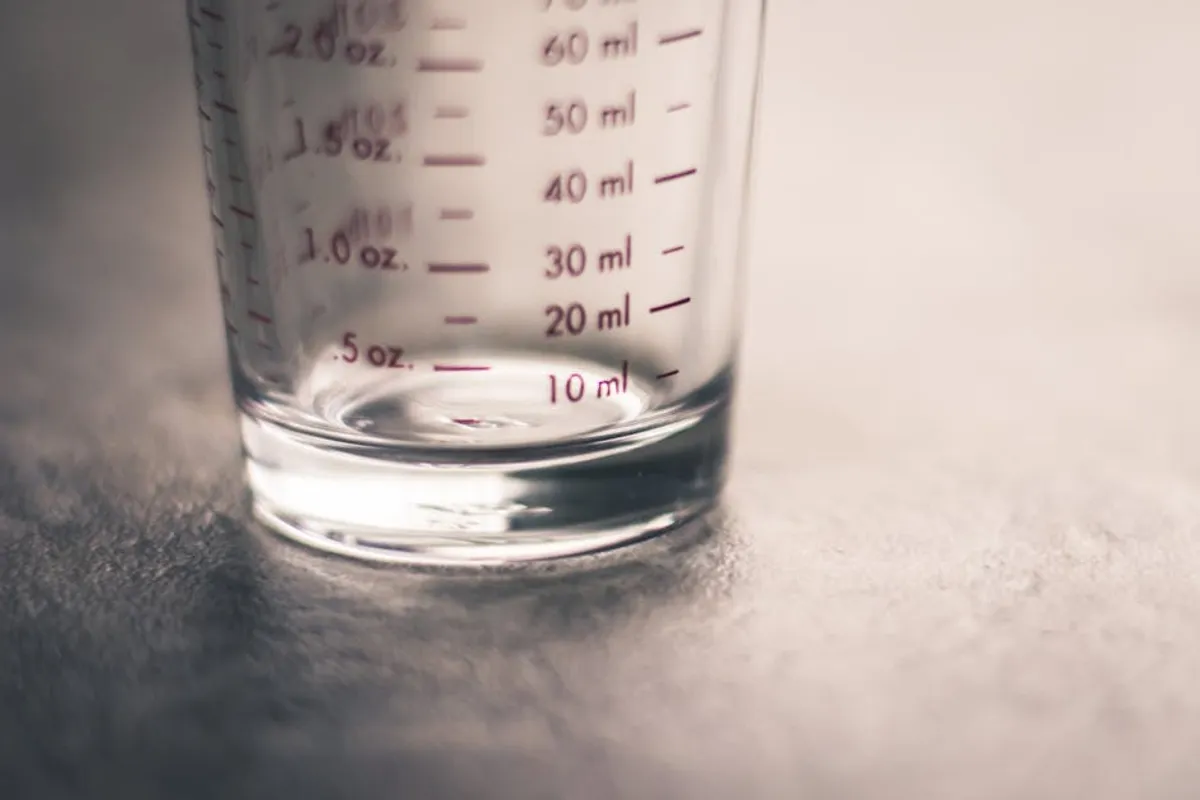
Standardized measuring spoons (1/4 tsp, 1/2 tsp, 1 tsp, 1/2 tbsp, 1 tbsp) and liquid measuring cups (with clear markings for fluid ounces, cups, and milliliters) are the primary tools for volumetric measurements. For liquid ingredients, use a liquid measuring cup at eye level to ensure the meniscus (the curved surface of the liquid) aligns with the desired mark. For tablespoons, ensure you level off dry ingredients with a straight edge (like the back of a knife) to remove excess, preventing over-measurement. For liquids, fill to the brim of the tablespoon for an accurate measure.
The Role of a Digital Kitchen Scale
A digital kitchen scale is an indispensable tool for precision, particularly when recipes call for ingredients by weight. It eliminates the inconsistencies inherent in volumetric measurements for dry goods.
Best for: Achieving exact ingredient ratios in baking, portion control, and accurately scaling recipes.
A scale typically measures in grams and ounces (weight), offering precision down to the gram or tenth of an ounce. This allows for direct measurement of ingredients specified in weight ounces, bypassing the need for complex or inaccurate volume-to-weight conversions.
Common Conversion Table and Quick Reference
Having a quick reference for common conversions can streamline your cooking process, especially when working with smaller liquid quantities.
- 1 Tablespoon (tbsp) = 0.5 Fluid Ounces (fl oz)
- 2 Tablespoons (tbsp) = 1 Fluid Ounce (fl oz)
- 4 Tablespoons (tbsp) = 2 Fluid Ounces (fl oz)
- 8 Tablespoons (tbsp) = 4 Fluid Ounces (fl oz)
- 16 Tablespoons (tbsp) = 8 Fluid Ounces (fl oz) = 1 Cup
This table covers the most frequent small-scale liquid conversions, providing a direct visual aid for quick mental checks or when jotting down recipe adjustments.
Ensuring Accuracy in Culinary Tasks
Accuracy in measurement transcends mere adherence to a recipe; it directly impacts the chemical reactions in baking and the flavor balance in cooking. Slight deviations in critical ingredients, like leavening agents or fats, can alter texture, rise, and overall palatability. For liquids, ensuring precise fluid ounce to tablespoon conversions prevents dishes from becoming too dry or too wet, maintaining the intended consistency. For dry ingredients, especially when weight is specified, using a scale avoids the common pitfalls of inconsistent packing, which can lead to significant variations in the actual amount of flour or sugar added. Consistent accuracy ensures that every time you prepare a dish, the results are predictable and meet the desired standard.
Mastering Kitchen Conversions for Consistent Results
Understanding the relationship between tablespoons and fluid ounces is a foundational skill for any cook. By consistently applying the 2 tablespoons per 1 fluid ounce rule for liquids and recognizing the distinct role of weight ounces for dry ingredients, you elevate your culinary precision. Invest in accurate measuring spoons, liquid measuring cups, and a reliable digital kitchen scale. These tools, combined with a clear understanding of measurement types, will empower you to confidently tackle any recipe, adapt ingredient quantities, and consistently achieve delicious, predictable outcomes in your kitchen.
Frequently Asked Questions About Kitchen Conversions
How many tablespoons are in a standard US fluid ounce?
There are exactly 2 tablespoons in 1 standard US fluid ounce.
Is a fluid ounce the same as a weight ounce for all ingredients?
No, a fluid ounce measures volume, while a weight ounce measures mass. They are only approximately interchangeable for water; for other ingredients, their densities differ, meaning 1 fluid ounce will not equal 1 weight ounce.
When should I use a kitchen scale instead of measuring spoons or cups?
A kitchen scale should be used whenever a recipe specifies ingredients by weight (e.g., "100g flour" or "4 oz sugar"), especially for dry ingredients in baking, to ensure maximum accuracy and consistent results.
Can I convert tablespoons of dry ingredients directly to weight ounces?
It is not recommended to directly convert tablespoons (volume) of dry ingredients to weight ounces without knowing the specific density of the ingredient. For accurate dry ingredient measurements by weight, always use a kitchen scale.