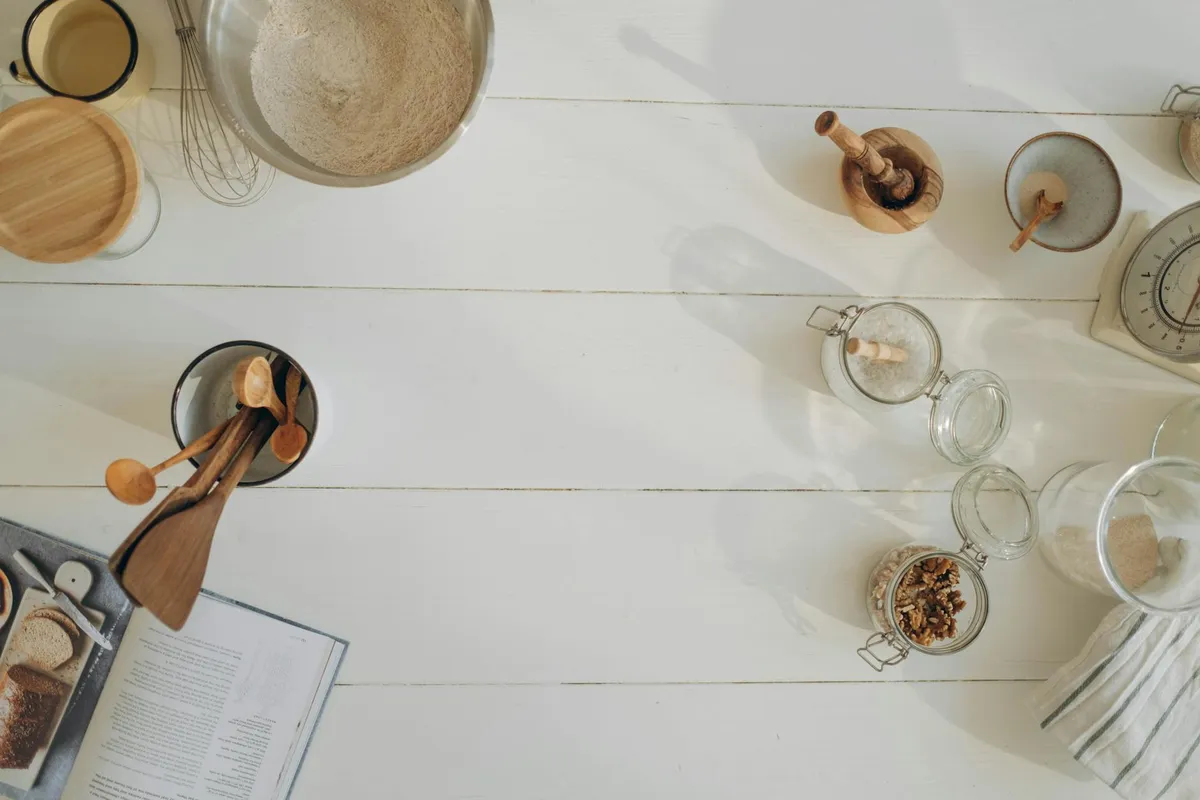
Baking tool marketing is mostly noise. Specialized gadgets that do one thing. "Must-have" tools that you use twice. The whole business runs on impulse purchases that end up in the back of the drawer.
Here are 5 tools I actually use weekly. All of them earn their place. None are gimmicks.
1. A digital kitchen scale ()
The single most useful baking tool I own. Baking is chemistry. Volume measurements (cups, tablespoons) are notoriously inaccurate for ingredients like flour where compaction varies. Weight measurements eliminate that variable.
What I use: Any basic digital scale that reads in grams to 1g precision. Mine cost $20 on Amazon five years ago.
Why it matters: Recipes converted to weight measurements (especially European recipes) are far more reproducible. Pie crusts, cookies, breads — all benefit from weighing flour rather than scooping.
Bottom line: If you do not own one, this is the first thing to buy.
2. A bench scraper ()
A simple metal rectangle with a handle. Sounds boring. Actually transformative for working with dough.
What it does:
- Cuts dough cleanly into portions
- Lifts and turns sticky dough without using your hands
- Cleans your work surface in one swipe
- Folds bread doughs without disturbing structure
- Makes perfectly square brownies
What I use: A basic stainless steel one (about $15). Not the plastic ones; metal is better.
Bottom line: The cheapest tool that punches the most above its weight. Buy one.
3. A really good rolling pin (-50)
The wooden tapered pins (also called "French pins") work better for most pie crusts than the heavy classic American pins with handles. Easier to control, less likely to overwork dough, more sensitive to thickness changes.
What I use: A basic French rolling pin. Beech wood. About $25.
Why this matters: The "right" rolling pin makes pie crust noticeably easier to roll. Less effort, more control, better results.
Skip: Marble rolling pins (heavy, hard to control). Silicone rolling pins (no real benefit). Anything with a handle (less precise control).
4. Good half-sheet pans ( each, get 2)
Half-sheet pans (18x13 inches) are the workhorse of baking. They fit in standard home ovens. They handle cookies, roasting, sheet cakes, sheet-pan dinners, and more.
What to look for: Heavy-gauge aluminum, rolled rims, light-colored surface. Brands like Nordic Ware Naturals are widely recommended for good reason.
Why two: You will routinely need two for batches of cookies, multi-tray bakes, or sheet-pan meals. One is not enough.
What to skip: Cheap thin pans that warp in the oven. Dark-colored non-stick pans that overcook bottoms. Disposable foil pans except for travel.
5. A stand mixer (if you bake regularly) — 0-600
Hot take: most people do not need a stand mixer for occasional baking. A hand mixer ($30) does almost everything most home bakers need.
BUT: if you bake regularly (especially breads, large quantities of cookies, or whipped meringues), a stand mixer is the upgrade that pays back over time.
What I use: KitchenAid Artisan (about $400). Has been running 6 years with no issues.
What to know:
- The 5-quart bowl is enough for most recipes
- The dough hook works well for breads up to about 4 cups of flour
- The whip attachment is essential for meringues, whipped cream, etc.
- The paddle covers cookies, frostings, and most cakes
Bottom line: Skip if you bake once a month. Buy if you bake weekly.
What I am NOT recommending you buy
Things that get hyped that mostly are not worth it:
- Pie weights. Use dried beans (any kind) on top of parchment. Same effect, no special purchase, beans are reusable for years.
- Fancy pastry blenders. Two butter knives or your fingertips work just as well for cutting butter into flour.
- Specialized mixing bowls. Glass or stainless steel bowls in three sizes is enough.
- Multi-piece measuring cup sets in different colors. One nesting set is fine. The novelty colors do nothing.
- Silicone baking mats for the entire pan. Parchment paper is cheaper, more flexible, and works as well or better.
- Decorative cookie cutters. Buy them only if you have a specific use case. Otherwise drawer clutter.
- Cake decorating kits. Unless you are actually decorating cakes regularly, this is aspirational gear.
The minimum viable baking kit
For starting out, here is what you actually need:
- Digital scale ($25)
- Bench scraper ($15)
- One rolling pin ($25)
- Two half-sheet pans ($50)
- One pie dish, one 9x13 baking dish, one 8x8 baking dish ($60 total)
- Mixing bowls in 3 sizes ($30)
- A basic hand mixer ($30)
- Spatulas, whisk, measuring spoons ($30)
Total: about $265.
This kit will let you make essentially any home-baked good. Add a stand mixer later if you start baking regularly. Add specialized pans (Bundt, springform) as specific recipes require them.
The takeaway
Most baking does not require fancy equipment. The 5 tools above plus a basic supporting cast covers 95% of home baking. The specialty gadgets are mostly drawer-clutter.
Spend on the boring fundamentals (scale, scraper, sheet pans, good rolling pin). Skip the gimmicks. Your baking will be better, your kitchen will be less cluttered, and your wallet will thank you.