Making dumplings from scratch offers significant advantages over relying on pre-made options, primarily in terms of ingredient control, flavor customization, and cost efficiency. For home cooks, it ensures fresh, high-quality components free from preservatives. For small-scale food businesses or caterers, it allows for unique recipe development and a distinct product that stands out in a competitive market. This detailed guide breaks down the process, focusing on practical steps and techniques to achieve consistent, delicious results every time.
Crafting the Ideal Dumpling Dough
The foundation of any exceptional dumpling is its wrapper. Achieving the right balance of elasticity and tenderness is critical. A basic dough consists of just two ingredients: all-purpose flour and water, though some recipes incorporate a pinch of salt for flavor or a small amount of oil for added pliability. The key lies in the hydration level and the kneading process.
- Flour selection: Use unbleached all-purpose flour for a good balance of protein and starch, yielding a wrapper that is both strong enough to hold fillings and tender when cooked.
- Water temperature: Hot water (around 180-200°F or 82-93°C) gelatinizes some of the starch in the flour, resulting in a softer, more pliable dough that is easier to roll and less prone to tearing. Cold water produces a chewier dough, suitable for potstickers where a crisp bottom is desired.
- Hydration ratio: A common starting point is a 2:1 ratio of flour to water by weight (e.g., 300g flour to 150g hot water). Adjust slightly as needed, adding flour if the dough is too sticky or a teaspoon of water if too dry.
- Kneading and resting: Knead the dough for 5-7 minutes until it forms a smooth, elastic ball. Overworking can lead to tough wrappers. After kneading, cover the dough tightly and let it rest for at least 30 minutes at room temperature. This allows the gluten to relax, making the dough much easier to roll thinly.
Developing Flavorful Fillings
The filling provides the primary flavor profile and texture contrast. A well-balanced filling combines protein, aromatics, and vegetables, seasoned appropriately. Consider the cooking method when formulating your filling; a filling for steamed dumplings might be juicier than one for pan-fried varieties.
Common protein bases:
- Ground pork (often preferred for its fat content, contributing moisture and flavor)
- Ground chicken or turkey (leaner, benefits from added fat or moisture)
- Shrimp (finely minced or chopped for texture)
- Tofu or mushrooms (for vegetarian options)
Essential aromatics and vegetables:
- Green onions, ginger, garlic
- Napa cabbage, bok choy, carrots, mushrooms (finely minced and often squeezed to remove excess moisture)
Seasoning recommendations:
- Soy sauce, sesame oil, white pepper, Shaoxing wine (optional, for depth)
- A touch of sugar can balance savory notes, while cornstarch or egg white can bind the filling and retain moisture.
Pro Tip for Filling Consistency: Always chill your filling mixture for at least 30 minutes before assembling. This firms up the ingredients, making it significantly easier to portion and handle, preventing the filling from squishing out during the folding process. It also helps the flavors meld.
Mastering the Art of Folding
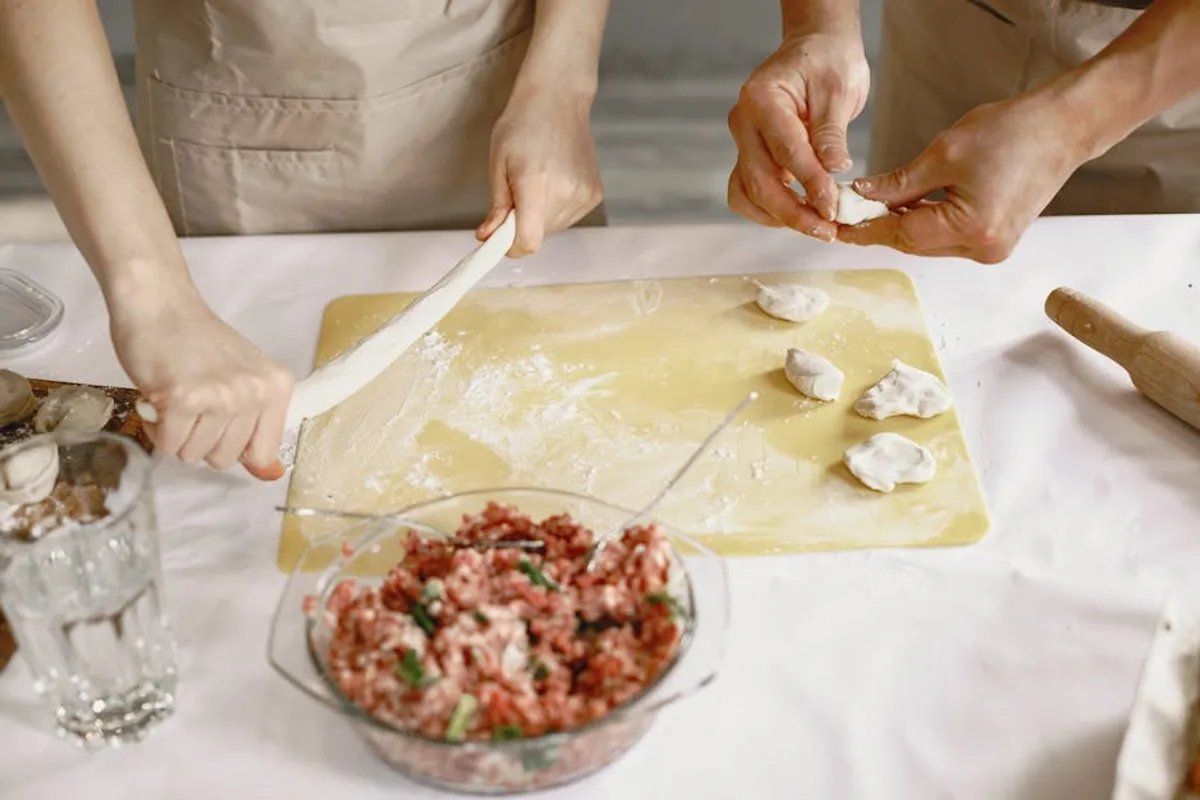
Efficient and consistent folding is crucial for both aesthetics and functionality. A well-sealed dumpling prevents leakage during cooking. While numerous folding techniques exist, mastering one or two reliable methods ensures consistent results.
Preparation for assembly:
- Roll the rested dough into a long cylinder (about 1 inch in diameter).
- Cut the cylinder into even pieces (around 10-15g each for standard dumplings).
- Flatten each piece into a small disc, then roll it into a thin, round wrapper (approximately 3-3.5 inches in diameter), keeping the edges slightly thinner than the center. Lightly flour your work surface to prevent sticking.
Basic folding techniques:
- Half-moon fold: Place a small amount of filling in the center, fold the wrapper in half, and press the edges firmly to seal. This is the simplest and most robust seal.
- Pleated half-moon: Starting from one end of a half-moon, create small pleats along the top edge, pressing them against the unpleated bottom edge to seal. This creates a classic, decorative look and a strong seal.
Work quickly to prevent wrappers from drying out. Keep unused wrappers covered with a damp cloth.
Cooking Techniques for Perfect Dumplings
The chosen cooking method impacts the final texture and flavor of your homemade dumplings. Each method highlights different characteristics of the wrapper and filling.
Boiling: Ideal for tender, chewy dumplings, particularly those with delicate fillings. Bring a large pot of salted water to a rolling boil. Add dumplings in batches to avoid overcrowding. Cook for 5-7 minutes, or until they float and the wrappers appear translucent. Serve immediately with dipping sauce.
Steaming: Produces a soft, slightly sticky wrapper with a juicy filling. Arrange dumplings in a single layer in a steamer basket lined with parchment paper or cabbage leaves (to prevent sticking). Steam over boiling water for 8-10 minutes, depending on size and filling density. This method retains moisture exceptionally well.
Pan-frying (Potstickers): Achieves a crispy bottom and tender, steamed top. Heat a tablespoon of oil in a non-stick skillet over medium-high heat. Place dumplings in a single layer, flat side down, and cook until the bottoms are golden brown (2-3 minutes). Carefully pour in about 1/2 cup of water (or chicken stock) and immediately cover the skillet. Reduce heat to medium-low and steam for 8-10 minutes until the water evaporates and the dumplings are cooked through. Remove the lid and cook for another minute or two to re-crisp the bottoms.
Efficient Storage and Preparation
Making a large batch of dumplings from scratch is efficient, allowing for future meals with minimal effort. Proper storage ensures quality and prevents sticking.
Freezing raw dumplings: Arrange freshly folded, uncooked dumplings in a single layer on a parchment-lined baking sheet. Freeze until solid (1-2 hours). Once frozen, transfer them to airtight freezer bags or containers. They can be stored for up to 2-3 months. Cook directly from frozen, adding a few extra minutes to the cooking time.
Refrigerating cooked dumplings: Cooked dumplings can be stored in an airtight container in the refrigerator for 2-3 days. Reheat gently by steaming, pan-frying, or microwaving until warmed through.
Achieving Consistent Homemade Dumpling Success
Mastering homemade dumplings from scratch involves attention to detail at each stage, from dough hydration to precise filling preparation and appropriate cooking. By controlling ingredient quality and technique, you produce a superior product that offers both culinary satisfaction and practical advantages. The investment in time yields a versatile, customizable, and cost-effective meal solution, whether for personal enjoyment or a distinctive offering in a commercial context.
Frequently Asked Questions
Q: My dumpling wrappers are tough. What went wrong?
A: Tough wrappers often result from either insufficient resting time for the dough, causing the gluten to remain too tight, or using too much flour during rolling, which dries out the dough. Ensure adequate resting and use minimal flour for dusting.
Q: Why does my dumpling filling taste bland?
A: Bland filling usually indicates under-seasoning or insufficient aromatics. Taste a small cooked portion of your filling before assembly to adjust seasoning. Ensure ginger, garlic, and green onions are fresh and used generously, and consider a dash of white pepper or Shaoxing wine for depth.
Q: How do I prevent my dumplings from sticking to the steamer or pan?
A: For steaming, line your steamer basket with parchment paper, cabbage leaves, or a thin layer of oil. When pan-frying, ensure your pan is adequately oiled and heated before placing dumplings. For freezing, always flash-freeze dumplings on a floured, parchment-lined tray before transferring to bags to prevent them from clumping together.
Q: Can I use pre-made wrappers for homemade fillings?
A: Yes, using quality store-bought wrappers is a time-saving option. Ensure they are fresh and pliable. While they offer convenience, making wrappers from scratch provides superior texture and control over ingredients.