
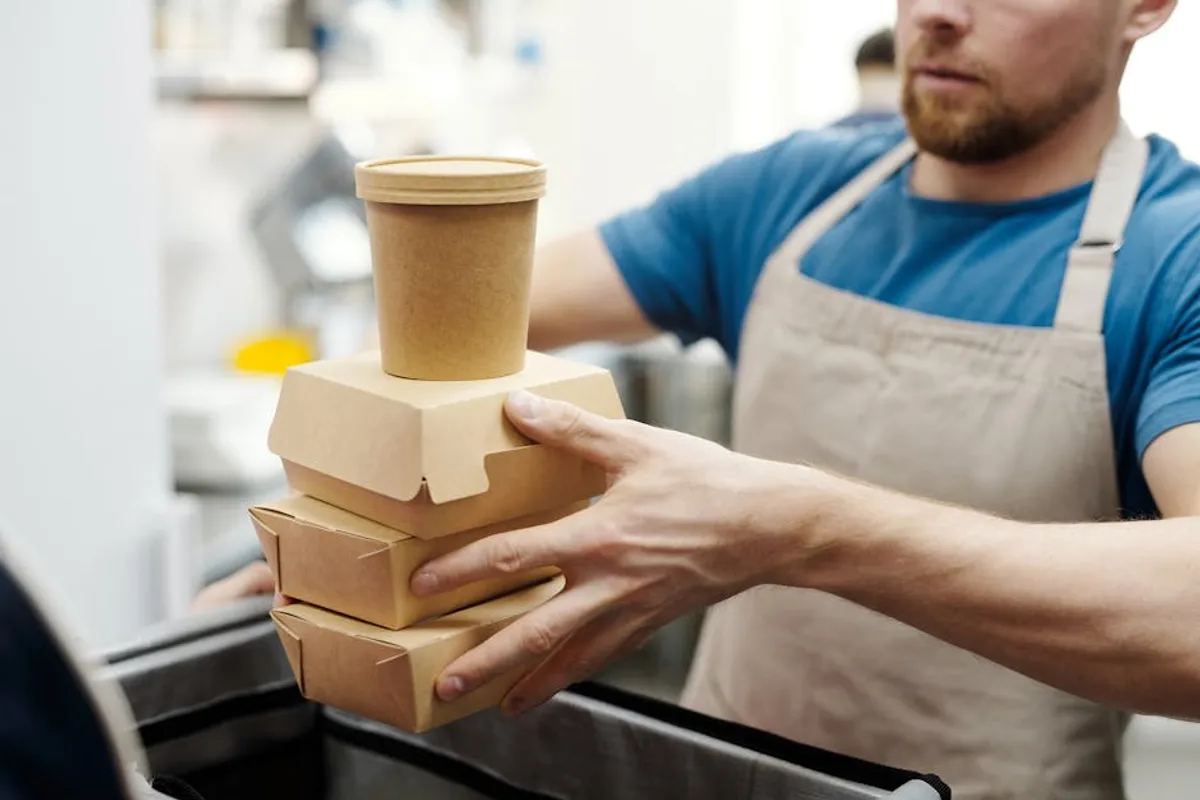
Takeaway packaging for bakeries and cafes extends beyond mere containment; it functions as a direct extension of your brand, a critical component of food safety, and a key driver of customer experience. The right packaging protects products, maintains temperature and freshness, reinforces brand identity through design, and communicates a commitment to quality and, increasingly, sustainability. Selecting effective packaging requires balancing material properties, aesthetic appeal, functional requirements for specific food items, and cost efficiency. Each choice impacts operational flow, customer perception, and ultimately, your bottom line.
How to Select Takeaway Packaging for Your Business
Choosing appropriate takeaway packaging involves a systematic evaluation of several factors to ensure it aligns with your products, brand, and operational goals. Prioritize these considerations:
- Product Compatibility: Match packaging to the specific food item. Hot items require insulated, breathable materials; cold items need leak-proof and often transparent options. Delicate pastries demand rigid protection, while sandwiches benefit from grease-resistant wraps.
- Material Properties: Evaluate materials based on their primary function. Paperboard and corrugated cardboard offer rigidity and customizability. Compostable options like bagasse or PLA-lined paper cater to sustainability goals. Clear plastics (PET/RPET) provide visibility for cold items. Consider heat retention, moisture resistance, and structural integrity.
- Brand Integration: Packaging is a mobile billboard. Custom printing, branded stickers, or embossed logos reinforce brand identity. Consider color schemes and design elements that reflect your cafe or bakery's aesthetic.
- Functionality and User Experience: Assess ease of assembly for staff, secure closure mechanisms to prevent spills, stackability for transport, and ease of opening/eating for the customer. Packaging should enhance, not hinder, the consumption experience.
- Cost-Effectiveness: Balance unit cost with value. Cheaper packaging that fails to protect food or leaks can result in product loss and negative customer feedback, ultimately costing more. Factor in bulk purchasing discounts and storage space.
- Sustainability Credentials: Demand for eco-friendly packaging is increasing. Research options like recycled content, compostable materials, biodegradability, and reusability. Communicate these efforts to your customers.
- Supply Chain Reliability: Partner with suppliers who can consistently deliver quality packaging on time, especially for custom orders. Evaluate lead times and minimum order quantities.
1. Custom-Printed Paperboard Bakery Boxes
These boxes are constructed from sturdy paperboard, often with a clay-coated exterior for a smooth, printable surface. They are designed for individual cakes, pies, cupcakes, or sets of pastries. The custom printing capability allows for full-color branding, intricate designs, and specific messaging, transforming a functional item into a powerful marketing tool. Their rigid structure offers protection against crushing, making them suitable for delicate baked goods.
Best For: Individual cakes, custom pastries, specialty tarts, gift-wrapped baked goods, high-value items where presentation is paramount.
Pros:
- Exceptional brand visibility and marketing opportunity due to custom printing.
- Provides structural integrity, protecting delicate items during transport.
- Available in various sizes and shapes to fit specific products.
- Often recyclable if clean and free of excessive grease/food residue.
Cons:
- Higher unit cost compared to generic or unprinted options.
- Minimum order quantities for custom printing can be substantial.
- Not ideal for hot, steamy items as moisture can compromise structural integrity.
- Can be bulky to store if not flat-packed.
Verdict: An essential investment for bakeries aiming to elevate their brand presence and ensure premium presentation for their signature products, justifying the higher initial outlay through increased brand recall and customer perception of quality.
2. Windowed Kraft Paperboard Boxes
These boxes combine the natural, rustic aesthetic of unbleached kraft paperboard with a clear plastic window, typically made from PET (polyethylene terephthalate). The window allows customers to view the product inside without opening the box, enhancing impulse purchases and showcasing the visual appeal of baked goods. The kraft material signals a more natural or artisanal approach, which resonates with certain customer segments.
Best For: Displaying cupcakes, cookies, small pastries, macarons, or any visually appealing baked item that benefits from immediate visibility.
Pros:
- Showcases products effectively, driving visual appeal and sales.
- Kraft material offers a perceived eco-friendly or artisanal aesthetic.
- Provides good protection for contents while allowing inspection.
- Often comes flat-packed, saving storage space.
Cons:
- The plastic window component may complicate recycling in some facilities.
- Less suitable for hot items where condensation might obscure the view or weaken the box.
- Grease can stain the kraft paper, impacting presentation if not lined.
- Custom printing on kraft can be more challenging for vibrant colors.
Verdict: An effective solution for bakeries prioritizing product visibility and a natural brand image, balancing aesthetic appeal with practical protection, though recycling of the mixed materials needs consideration.
3. Corrugated Cardboard Catering Trays with Lids
Constructed from fluted corrugated cardboard, these trays offer superior strength and rigidity, making them ideal for transporting larger quantities of food. They typically come with separate, often interlocking, lids that provide secure closure and stackability. Designed for bulk orders, catering events, or family-sized portions, they ensure contents remain protected and organized during transit.
Best For: Large pastry platters, dozens of muffins or bagels, sandwich assortments for catering, bulk cookie orders, or larger takeaway meal kits.
Pros:
- High structural integrity prevents crushing of large or heavy orders.
- Secure lids minimize spills and maintain food freshness.
- Stackable design optimizes transport and delivery logistics.
- Often made from recycled content and widely recyclable post-use.
Cons:
- Can be bulky to store, even when flat-packed, due to larger dimensions.
- Less aesthetically refined for individual, premium items compared to paperboard boxes.
- May require internal liners for greasy or moist items to prevent saturation.
- Higher unit cost due to material volume and construction.
Verdict: Indispensable for bakeries and cafes with a catering component or those offering bulk takeaway options, providing robust protection and efficient transport for larger food quantities.
4. Compostable Bagasse Clamshell Containers
Bagasse containers are made from sugarcane pulp, a byproduct of sugar production, making them a rapidly renewable and compostable alternative to traditional foam or plastic. These clamshells are rigid, grease-resistant, and microwave-safe, offering a sustainable solution for hot or cold food items. Their natural, unbleached appearance aligns with eco-conscious branding.
Best For: Hot sandwiches, breakfast burritos, savory pastries, small meal portions, and any item requiring heat retention and grease resistance with an eco-friendly focus.
Pros:
- Certified compostable, appealing to environmentally conscious consumers.
- Excellent heat retention for hot food items.
- Naturally grease and moisture resistant without added coatings.
- Microwave and freezer safe, offering versatility for customer reheating.
Cons:
- Can be more expensive than conventional foam or plastic options.
- Compostability requires access to industrial composting facilities, which are not universally available.
- May have a slightly fibrous texture that some customers find less refined than smooth plastic.
- Not suitable for items that need to be visible through the packaging.
Verdict: A premium, sustainable choice for businesses committed to reducing environmental impact, offering robust performance for a range of hot and cold takeaway items where compostability is a key differentiator.
5. Double-Walled Insulated Paper Cups
These cups feature two layers of paperboard with an insulating air gap between them, specifically designed to keep hot beverages hot and cold beverages cold for longer periods. The double-wall construction eliminates the need for a separate sleeve, improving customer convenience and reducing material use. They are typically lined with a thin layer of PLA or PE for liquid resistance.
Best For: Hot coffee, tea, hot chocolate, and other hot beverages where temperature retention and customer comfort are priorities.
Pros:
- Superior heat retention compared to single-walled cups, enhancing drink quality.
- Eliminates the need for cup sleeves, simplifying operations and reducing waste.
- Provides a comfortable grip for customers, even with very hot liquids.
- Offers a smooth surface for custom branding and logos.
Cons:
- Higher unit cost than single-walled cups.
- PE-lined versions are difficult to recycle; PLA-lined versions require industrial composting.
- Larger storage footprint than single-walled cups due to thicker construction.
- Not ideal for extremely cold, iced beverages where condensation might be an issue on the exterior.
Verdict: A premium choice for cafes prioritizing beverage quality and customer comfort, justifying the higher cost through enhanced product experience and operational efficiency by removing the need for sleeves.
6. Recycled Kraft Paper Bags with Handles
These are standard carry bags made from recycled kraft paper, often featuring twisted paper handles for easy transport. They are a versatile, environmentally conscious option for bundling multiple items or individual larger products. Their strength and capacity vary with paper thickness and construction, offering a practical solution for general takeaway orders.
Best For: Bundling multiple pastries, loaves of bread, coffee bags, takeaway lunch orders, or general merchandise from the cafe/bakery.
Pros:
- Made from recycled content, appealing to eco-conscious consumers.
- Provides a convenient way for customers to carry multiple items.
- Easily customizable with stamps, stickers, or custom printing for branding.
- Widely recyclable and often compostable (if free of heavy food residue).
Cons:
- Limited protection for delicate items; contents can shift or be crushed.
- Not waterproof or highly moisture-resistant; susceptible to damage from spills.
- Handles can tear if overloaded or with sharp-edged contents.
- Less premium feel compared to rigid box packaging for high-value items.
Verdict: A practical, cost-effective, and environmentally responsible choice for general takeaway orders, serving as a reliable carrier for a variety of products when primary product protection is handled by internal packaging.
7. Grease-Resistant Waxed Paper Wraps
These wraps are thin sheets of paper treated with a wax coating on one or both sides, providing a barrier against grease and moisture. They are flexible and conformable, making them ideal for wrapping individual food items. The wax coating prevents oils from soaking through, maintaining a clean appearance and protecting other items in a bag.
Best For: Sandwiches, wraps, burritos, bagels, cookies, pastries, or as a liner for baskets and trays to prevent grease transfer.
Pros:
- Effectively prevents grease and moisture from permeating, keeping hands and bags clean.
- Flexible and easy to wrap around irregularly shaped items.
- Cost-effective for individual item packaging.
- Can be custom printed for branding at a relatively low cost.
Cons:
- Not suitable for items requiring structural protection or heat retention.
- Wax coating can make recycling more challenging in some facilities.
- Does not provide visibility of the product.
- Can be difficult to separate individual sheets quickly during peak service.
Verdict: An indispensable, economical solution for cafes and bakeries serving grab-and-go items, ensuring a clean and pleasant eating experience by effectively managing grease and moisture.
8. Clear RPET Plastic Containers
RPET (recycled polyethylene terephthalate) containers are made from post-consumer recycled plastic, offering a sustainable alternative to virgin plastic. These containers are transparent, allowing full visibility of the product, and are typically rigid and leak-resistant. They are suitable for cold items that benefit from visual display and secure containment.
Best For: Salads, fruit cups, parfaits, cold desserts, yogurt, granola, and other cold, often layered, food items where presentation and visibility are key.
Pros:
- Excellent product visibility, enhancing impulse purchases.
- Made from recycled content, appealing to environmentally conscious consumers.
- Rigid and leak-proof, providing secure transport for liquid or semi-liquid items.
- Lightweight and stackable for efficient storage and transport.
Cons:
- Not suitable for hot food items as they can deform.
- Recyclability depends on local infrastructure; not all facilities accept RPET.
- Can scratch easily, impacting visual clarity over time or with rough handling.
- Perceived as less "natural" than paper-based alternatives by some customers.
Verdict: A strong choice for cafes and bakeries offering cold, visually appealing items, balancing product presentation with a commitment to using recycled materials, provided local recycling options are robust.
9. Kraft Paperboard Sleeves and Carriers
These are minimalist paperboard structures designed to hold and protect specific items without fully enclosing them. Sleeves wrap around individual pastries or cups, providing a branding surface and a bit of structural support. Carriers are designed to hold multiple cups, typically two or four, preventing spills and making transport easier for customers.
Best For: Individual muffins, croissants, bagels (sleeves); multiple hot or cold beverages (carriers).
Pros:
- Cost-effective for individual item protection or multi-drink transport.
- Provides a surface for branding without full custom box costs.
- Sleeves offer a clean way to handle items without touching the product directly.
- Cup carriers prevent spills and simplify carrying multiple drinks.
Cons:
- Limited protection against crushing for sleeves; not fully enclosed.
- Carriers are single-use and add to waste volume.
- Sleeves may not be suitable for very moist or greasy items.
- Can be fiddly to assemble quickly during busy periods if not pre-glued.
Verdict: Highly practical and economical for cafes and bakeries needing basic protection, branding opportunities for individual items, and essential convenience for customers purchasing multiple beverages.
10. Tamper-Evident Packaging Solutions
Tamper-evident packaging incorporates features that visibly indicate if a package has been opened or altered since it was sealed. This can include tear strips, security seals, specialized labels, or integrated locking mechanisms. For bakeries and cafes, this is increasingly important for delivery orders, reassuring customers about food safety and integrity.
Best For: All delivery orders, especially for cakes, large catering platters, and any food item where security and customer trust are paramount.
Pros:
- Enhances customer trust and confidence, particularly for third-party delivery.
- Provides a clear visual indicator of package integrity, reducing disputes.
- Helps meet food safety and hygiene expectations.
- Can be integrated into various packaging types (boxes, bags, containers).
Cons:
- Adds complexity to packaging processes and staff training.
- Can increase unit cost depending on the security feature implemented.
- May not be fully foolproof against determined tampering, but deters casual interference.
- Requires consistent application by staff to be effective.
Verdict: A crucial investment for any bakery or cafe engaged in delivery services, providing essential reassurance to customers and protecting brand reputation by ensuring food arrives as intended.
11. Reusable/Returnable Container Systems
These systems involve customers purchasing or borrowing durable, food-grade containers that can be washed and reused multiple times. Businesses often partner with third-party services or manage their own deposit/return schemes. This approach significantly reduces single-use waste and appeals strongly to environmentally conscious consumers.
Best For: Regular customers, loyalty programs, cafes with strong community engagement, and businesses aiming for a zero-waste model for items like coffee, salads, or bulk baked goods.
Pros:
- Drastically reduces single-use packaging waste, aligning with strong sustainability goals.
- Fosters customer loyalty and engagement through participation in a circular economy.
- Can offer a premium experience with high-quality, durable containers.
- Potential for cost savings over time by reducing single-use packaging purchases.
Cons:
- Requires significant operational changes for collection, washing, and redistribution.
- Initial investment in reusable containers can be high.
- Customer adoption can be slow, requiring education and incentives.
- Hygiene and sanitation protocols must be rigorously maintained.
Verdict: A forward-thinking, high-impact solution for businesses ready to invest in a circular economy model, building strong customer loyalty and a powerful green brand image, despite the operational complexities.
12. Aluminum Foil Containers with Paperboard Lids
Aluminum foil containers are highly efficient at conducting and retaining heat, making them ideal for items that need to stay hot or be reheated. They are rigid, leak-proof, and can be oven-safe. Paired with crimp-on paperboard lids, they offer a practical solution for larger, hot food portions, often with a more industrial or catering aesthetic.
Best For: Hot savory pies, baked pastas, casseroles, large portions of hot meals, or items intended for reheating by the customer in their oven.
Pros:
- Excellent heat retention and oven-safe properties.
- Rigid and durable, protecting contents during transport.
- Leak-proof and suitable for saucy or moist items.
- Aluminum is widely recyclable in many areas.
Cons:
- Not microwave-safe (unless specifically designed for it).
- Lacks visual appeal compared to custom-printed paperboard boxes.
- Lids can sometimes be difficult to secure perfectly, requiring careful crimping.
- Perceived as less "natural" or "artisanal" than kraft or compostable options.
Verdict: A highly functional choice for bakeries and cafes offering hot, hearty meals or items designed for customer reheating, prioritizing thermal performance and robust containment over visual aesthetics.
Optimizing Your Packaging Strategy
Selecting the right takeaway packaging is an ongoing process that requires continuous evaluation and adaptation. Start by clearly defining the primary function of packaging for each product: is it protection, presentation, insulation, or sustainability? Conduct a thorough audit of your current packaging to identify pain points, such as recurring spills, high costs, or negative customer feedback. Research potential suppliers by requesting samples and comparing material specifications, minimum order quantities, and lead times. Test new packaging with your staff for ease of assembly and with a small group of customers for feedback on functionality and aesthetic appeal. Monitor customer reviews and social media mentions related to your packaging. Finally, regularly reassess your packaging choices against evolving consumer preferences for sustainability and your operational budget to ensure your strategy remains effective and commercially viable.
Frequently Asked Questions
What are the most sustainable takeaway packaging options for bakeries and cafes?
The most sustainable options generally include certified compostable materials like bagasse (sugarcane pulp), PLA-lined paper products, and packaging made from high percentages of post-consumer recycled content (e.g., RPET plastic or recycled kraft paper). Reusable/returnable container systems offer the highest sustainability impact by eliminating single-use waste entirely, though they require more complex operational management.
How important is custom branding on takeaway packaging?
Custom branding is crucial for differentiating your bakery or cafe in a competitive market. It transforms packaging from a mere container into a marketing asset, reinforcing brand identity, enhancing customer recall, and creating a more premium perception. Branded packaging can also increase customer loyalty and serve as an organic marketing channel



